This guide assumes you have read, or will read, our companion guides on setting up a company in Kosovo, hiring in Kosovo and opening a business bank account. Here we assemble those pieces into a BPO-specific launch.
Why Kosovo for BPO specifically
Three things make Kosovo a standout BPO location rather than just a cheap one. First, language: English is the working language of the sector, and the diaspora-driven depth of German is a genuine rarity — German-language support that would be expensive and scarce in Serbia or Romania is affordable and available here. Second, cost structure: the flat 10% corporate tax, light 5% employer pension charge and euro invoicing mean the all-in cost of a seat is among the lowest in Europe, and the economics improve as you scale. Third, the talent pipeline: Europe's youngest population and a steady graduate output mean a BPO can grow a team of tens or hundreds without exhausting the local market the way a smaller country would.
For a contact centre, a customer-experience operation, a finance-and-accounting shared-services function or a content/moderation team, that combination is hard to beat within a two-hour flight of Western Europe.
The 90-day launch, in four parallel tracks
The mistake first-time entrants make is running the launch as a sequence — entity, then bank, then office, then hiring — and watching it stretch to six months. The operations that launch in 90 days run four tracks in parallel from week one.
| Track | Weeks 1–4 | Weeks 4–8 | Weeks 8–12 |
|---|---|---|---|
| Legal | Register SH.P.K., fiscal number, VAT | Start bank KYC | Account live; contracts signed |
| Office | Take serviced space (operational day one) | Configure seats, connectivity | Scale seat count as team grows |
| People | Brief recruiter; open first roles | Interview; offer first cohort | Onboard cohort 1; pipeline cohort 2 |
| Tech | Spec connectivity, tooling, security | Provision systems, test failover | Go live; monitor |
The office track is where serviced space earns its place: by taking a finished, connected office rather than commissioning a fit-out, the office is never the bottleneck. The bank account remains the long pole on the legal track, which is exactly why the other three tracks run alongside it rather than waiting.
The office: seats, connectivity, the room itself
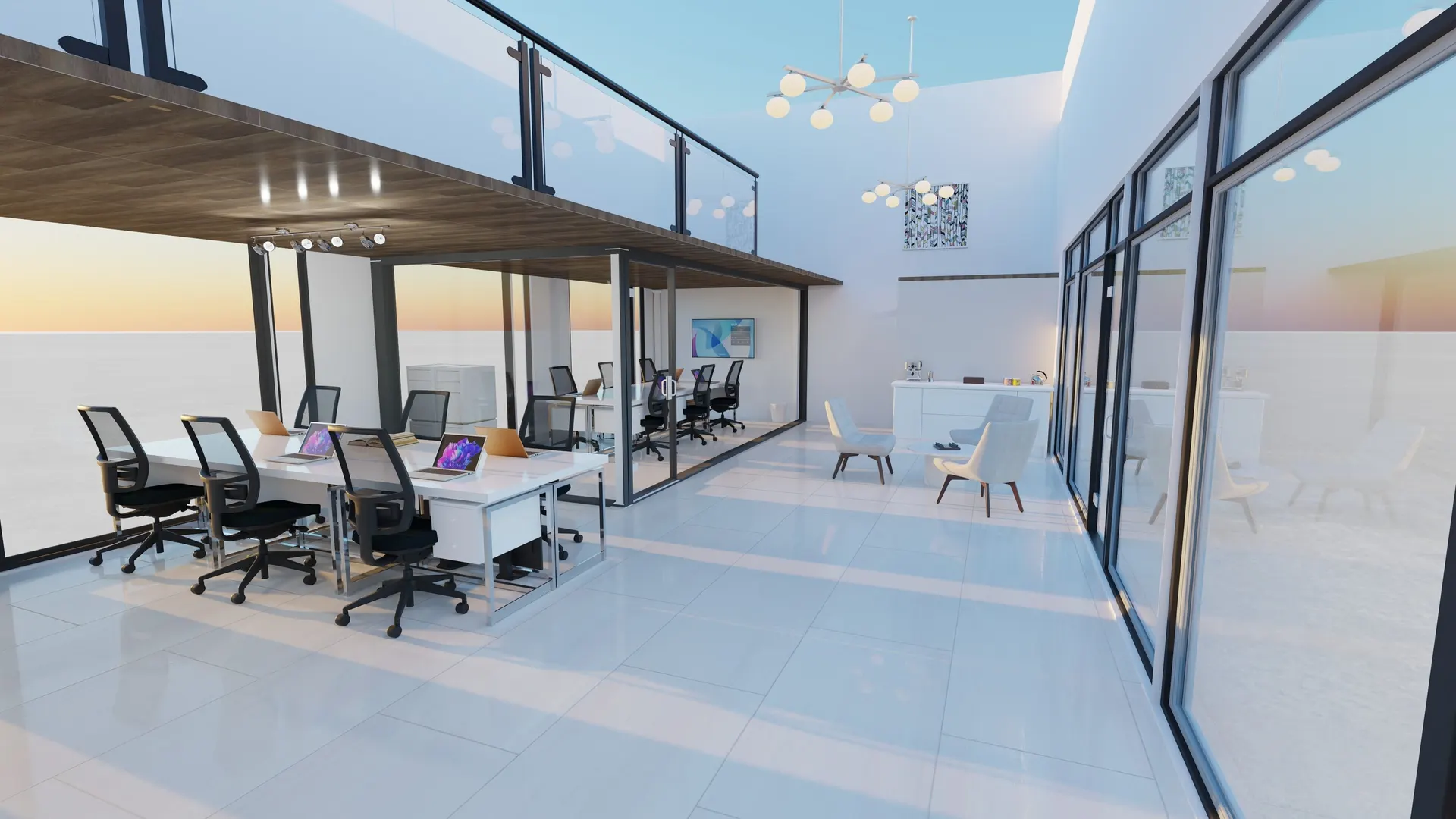
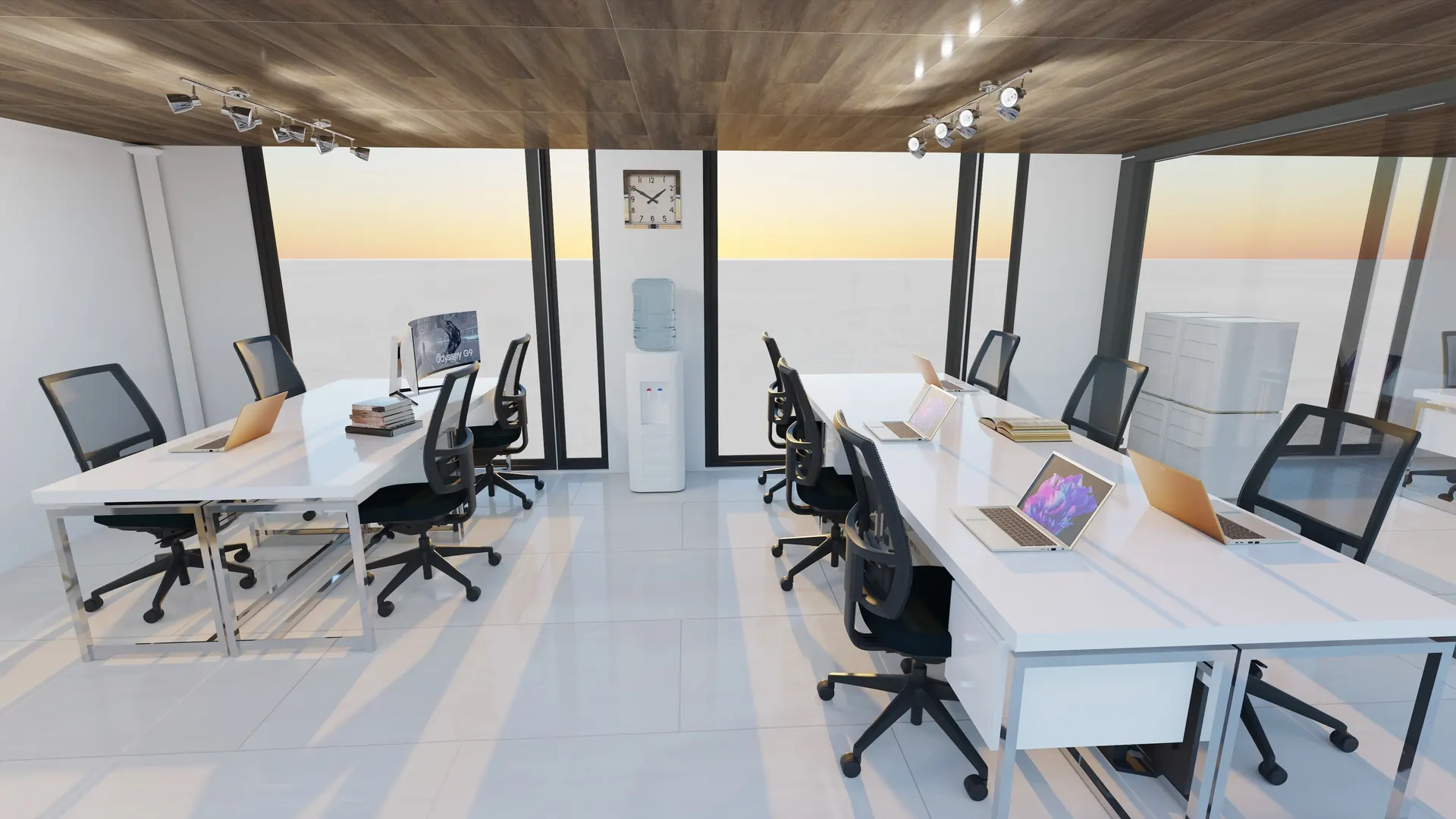
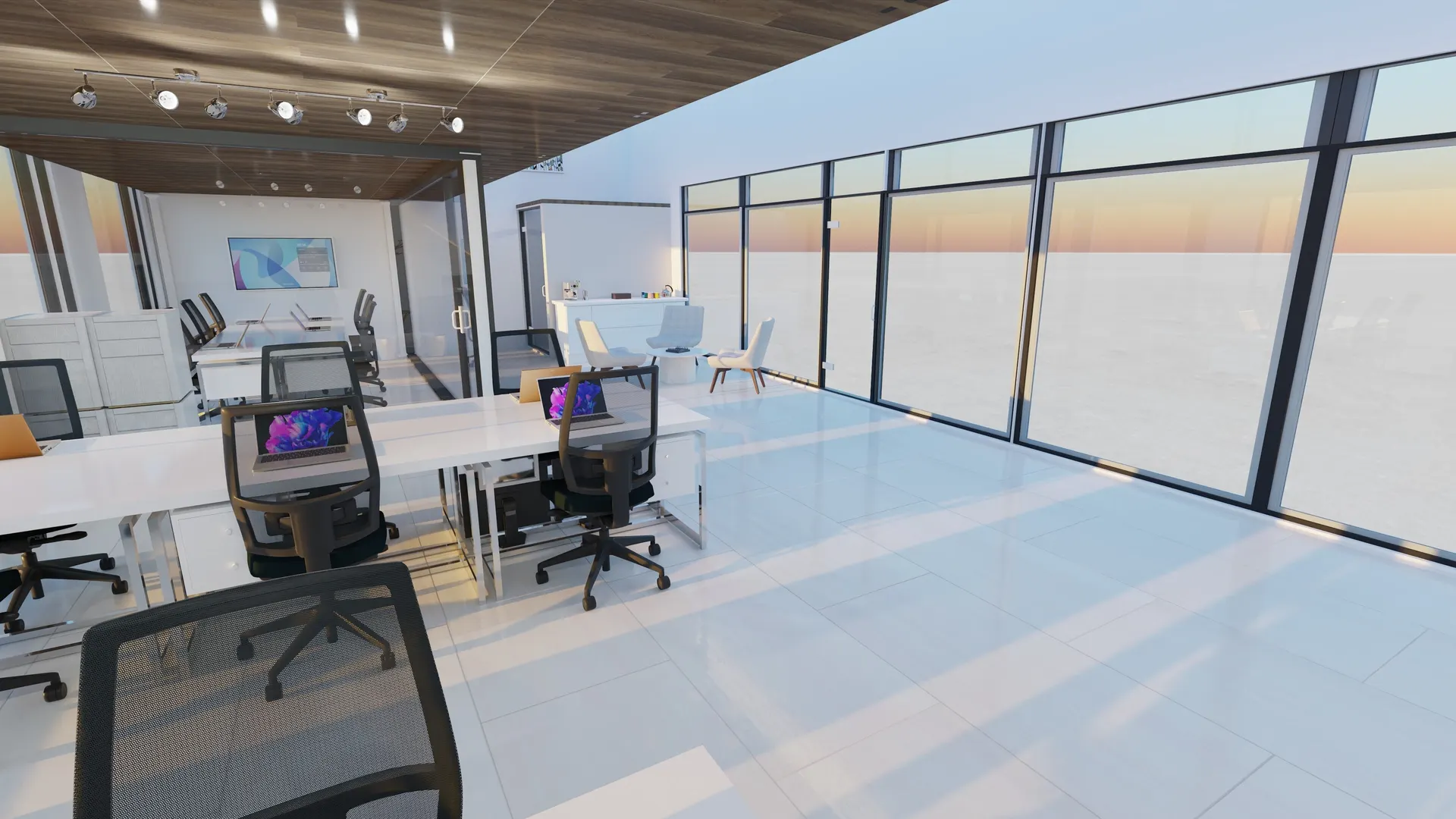
A BPO office has requirements a generic office does not. You need reliable, redundant connectivity — symmetric bandwidth and a failover path, because a contact centre that drops its line stops earning. You need seat density that still works acoustically — agents on calls need an environment that does not bleed noise. You need meeting and training rooms for onboarding waves, and phone booths for escalations and private calls. And you need an address that helps you recruit, because in a competitive talent market the quality of the workplace is part of the offer.
This is the brief Artana's nearshore & BPO team offices are built to meet: business-grade connectivity, a professional floor at the Dukagjini Centre, meeting rooms, phone booths, and the option to scale seat count as cohorts land — without you running a construction project on the critical path. For a 16–18 seat operation, an entire floor at Dukagjini Centre is from €3,295 per month — around €190 per seat, all-inclusive. For a larger anchor operation, the Dukagjini Tower offers bespoke whole-floor configurations.
Hiring in waves
BPO hiring is not a one-off; it is a pipeline. The pattern that works is cohort-based: recruit, onboard and train in batches, so training capacity is used efficiently and quality stays consistent. Plan your first cohort to land the week the office and systems are ready, and keep the recruiter working on the next cohort before the first has finished onboarding. Indicative salary ranges by role are in our hiring guide; the headline for BPO is that English-language agents are inexpensive and German-language agents, while commanding a premium, are far cheaper than their Western European equivalents.
Retention matters more in BPO than almost any sector, because attrition destroys the training investment. A credible, comfortable, well-run workplace is one of the cheapest retention levers available — it is far easier to keep agents in a professional central office than in a cramped or makeshift space.
Data protection and compliance
A BPO handles other people's customer data, so data protection is not optional. Kosovo's framework — Law No. 06/L-082 on the Protection of Personal Data — is modelled closely on the EU GDPR, with an independent supervisory authority, which means a BPO serving EU clients is operating in a broadly aligned regime. That said, the specifics of cross-border data transfer, processing agreements and your clients' own contractual requirements need to be confirmed with a data-protection adviser. Build the compliance posture in from the start — it is far cheaper than retrofitting it, and enterprise clients will ask.
"A BPO lives or dies on two things after the cost case: how fast it can stand up, and whether it can keep the people it trains. A finished, connected, central office answers both — the team is live in weeks, and they stay because the place is somewhere they want to work."
Egzon Hallaci, Co-Founder, Artana Group
The launch checklist
- Run four tracks in parallel from week one: legal, office, people, tech — do not sequence them.
- Register the SH.P.K. early; treat the bank account (2–4 weeks) as the long pole and start it the moment you have the fiscal number.
- Take serviced space so the office is operational on day one, with business-grade redundant connectivity and room to scale seats.
- Hire in cohorts; keep the recruiter a cohort ahead.
- Use Kosovo's German-language depth if your operation needs it — it is the standout advantage.
- Build GDPR-aligned data compliance in from the start under Law 06/L-082.
- Treat the workplace as a retention and recruiting asset, not overhead.
Common questions.
- Why is Kosovo good for BPO and shared services?
- Kosovo combines the lowest cost tier in Europe with a young, English-fluent workforce and an unusually deep pool of German speakers from the diaspora. Add a flat 10% corporate tax, euro invoicing and same-time-zone working with Western Europe, and it is one of the most cost-effective places to run customer support, back-office and shared-services operations.
- How long does it take to launch a BPO operation in Kosovo?
- Plan for roughly 90 days from decision to a working team. Company registration takes days and the corporate bank account two to four weeks; in parallel you fit out or take a serviced office, recruit the first cohort, and stand up connectivity and tooling. With serviced space removing the office build, a first team can be live within that window.
- Can I staff German-language support in Kosovo?
- Yes — this is one of Kosovo's strongest BPO advantages. The large Kosovar diaspora in Germany, Switzerland and Austria means German-language support, sales and operations roles can be staffed at a fraction of Western European cost, more affordably than in most other nearshore markets.
- Is data protection in Kosovo compatible with the EU GDPR?
- Kosovo's data-protection law (Law No. 06/L-082) is modelled closely on the EU GDPR, with an independent supervisory authority. For a BPO handling EU customer data, the framework is broadly aligned, but you should confirm the specific transfer and processing arrangements with a data-protection adviser for your contracts.